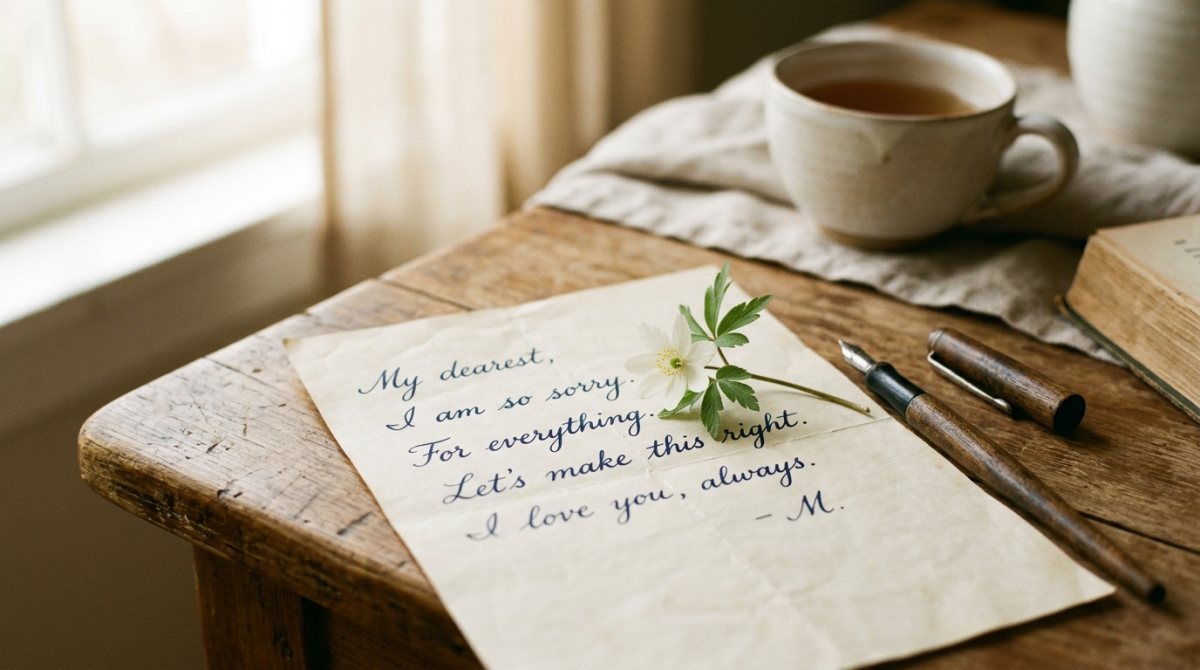
How to Apologize Sincerely to Your Spouse
An apology is not weakness but courage. How do you apologize to your spouse in a way that heals rather than deepens the wound? Practical steps and mistakes to avoid.
Few words carry the power of “I’m sorry” when spoken sincerely. An apology is a bridge that restores what a mistake tore down, yet it is an art that many do not master. Between the one who will not apologize out of pride and the one who offers an incomplete apology that deepens the wound, many chances at reconciliation are lost. This article teaches you how to make your apology a true balm rather than mere cold words.
An Apology Is Strength, Not Weakness
Some imagine that apologizing is a humiliation that strips them of their dignity, when the truth is the very opposite. To admit your fault requires courage and maturity; it is a sign of confidence, not weakness. The Prophet (peace be upon him) was the most merciful and gentle of people with his family, and returning to the truth is a quality of the great, not the small. The one who apologizes first is usually the stronger in heart and the more mature in mind.
Before Apologizing: Calm Down and Understand
An apology at the peak of anger is often an apology to escape the situation rather than to repair it. Take time to calm down, and understand what truly wounded your spouse: was it the act itself or the manner? When you understand the wound, your apology becomes precise, touching the place of pain, rather than general words that pass without effect.
The Steps of a Sincere Apology
An effective apology is not a single sentence but a complete sequence of steps:
- Clear admission: name the mistake plainly without evasion: “I was wrong when I raised my voice at you.”
- Taking responsibility: do not blame the circumstance or your spouse: “I was tired” is not an excuse but a justification.
- Empathy: acknowledge the effect of your mistake: “I know my words hurt you, and I am sorry for that.”
- Correction: offer what you will do to put it right and avoid repeating it.
- Asking forgiveness: give your spouse their space without rushing them to pardon.
Mistakes That Ruin an Apology
Many apologies fail because they carry a hidden attack within them. Beware the “conditional apology”: “Sorry if you were upset” — it places the fault on the other’s feeling. Beware the “apology-blame”: “Sorry, but you started it.” Avoid digging up the past and inserting old mistakes. An apology that demands an immediate return is not an apology but a bargain.
An apology followed by “but…” cancels itself. Say your sorrow in full, then be silent and give the heart its time to soften.
Apologize Through Action, Not Only Words
The most eloquent apology is the one deeds confirm. To apologize for your neglect and then return to it empties your words of meaning. A true apology is followed by tangible change: greater attention, fuller presence, correction where possible. When your spouse sees the effect of your apology in your behaviour, they are reassured that your words were not merely a passing pacification.
And When You Are the One Apologized To
Reconciliation is a two-way road. If your spouse apologizes to you sincerely, receive their apology with grace and do not exploit their momentary vulnerability to win. Pardoning when able is the character of the noble, and Allah loves those who pardon people. Whoever is harsh with the one apologizing teaches them to hide their mistakes rather than confess them, while whoever forgives beautifully opens a door to honesty forever.
Conclusion
A sincere apology is a skill that is learned and practised, and it is among the most beneficial protectors of affection between spouses. Admit clearly, take your responsibility, empathize, correct through action, and ask forgiveness without condition. Homes are not destroyed by the occurrence of a mistake — everyone errs — but by the pride that refuses to apologize and the insistence on the error. Whoever humbles themselves before their spouse, Allah raises them and raises their home.