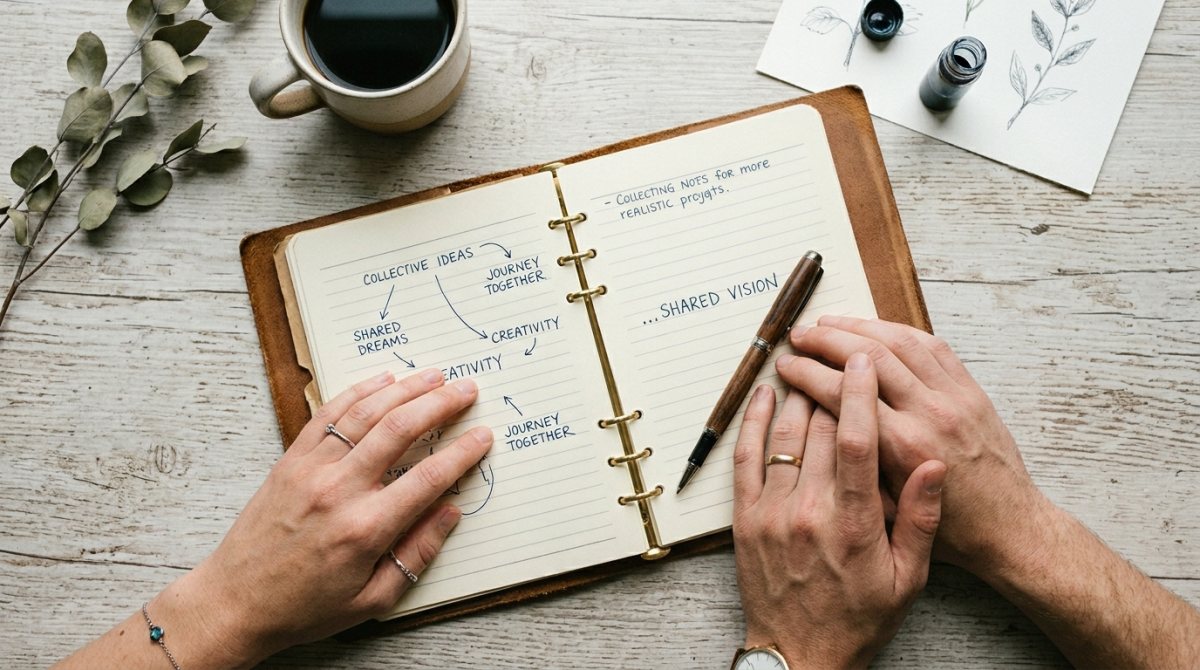
Making Decisions Together: Consultation Between Spouses
Marriage turns two independent decision-makers into one team, and how a couple makes decisions together shapes the whole tone of the home. Consultation, done well, builds trust with every choice.
Before marriage, you decided most things alone. You chose how to spend your time and money, where to go, what to prioritize, answering mainly to yourself. Marriage changes this overnight. Suddenly even ordinary choices involve another person with their own views, and the way a couple learns to decide together quietly shapes the entire tone of their home, for better or worse.
Consultation between spouses is not a procedure to be endured; it is one of the deepest expressions of partnership. Every decision made together, with mutual respect, adds a small deposit of trust. Every decision made by one over the other withdraws from that same account.
From Two Decision-Makers to One Team
The shift from independence to partnership is one of the hardest adjustments of early marriage. People used to deciding alone can feel constrained by having to consult, as though their freedom has shrunk. But consulting your spouse is not losing your freedom; it is gaining a partner.
The couples who thrive learn to see decisions as a shared project rather than a competition. The question moves from “what do I want” to “what is best for us,” and that small shift in framing changes everything about how choices are made.
The Beauty of Consultation
Islam honors consultation, and praises those who conduct their affairs by mutual counsel. Within marriage, this principle is a gift: it means neither spouse is meant to dominate the other, and decisions are meant to flow from shared discussion rather than one person’s command.
Approaching decisions in this spirit lifts them above a power struggle. Consultation says that both people’s views have weight, that both are trusted to think wisely, and that the marriage is a partnership of two minds, not the rule of one over the other.
Big Decisions and Small Ones
Not every decision needs a full consultation. Couples function best when they agree, roughly, on which choices each can make alone and which require talking together. Minor daily matters can be handled independently; major decisions about money, children, moving, or family deserve real joint discussion.
Trouble often comes when this is unclear, when one spouse makes a big decision alone that the other felt entitled to share, or when every tiny choice becomes an exhausting negotiation. A shared sense of which decisions are “ours” prevents both problems.
When You Disagree on a Decision
Consultation does not mean you will always agree. Two thoughtful people will often see the same decision differently, and that is healthy. The goal of consultation is not instant agreement but genuine understanding of each other’s reasoning before a choice is made.
When you disagree, resist the urge to simply push harder. Ask why your spouse sees it differently. Often their view contains something you missed, and even when it does not, understanding it makes the final decision wiser and the disagreement less bitter.
Avoiding the Power Struggle
Decisions become destructive when they turn into contests over who is in charge. Once a choice is really about winning rather than about what is best, the marriage loses, even for the person who “wins” the argument. A home run by one person’s will is rarely a peaceful one.
The antidote is to keep returning to the shared goal: a good outcome for the family, not a victory for either spouse. When both people genuinely want what is best for the marriage, decisions stop being battles and become problems solved together.
Respecting Each Other’s Strengths
In most marriages, each spouse has areas of greater knowledge or skill. One may understand finances better, the other may read people more wisely, one may be more practical, the other more far-sighted. A wise couple leans on each other’s strengths rather than competing across them.
This does not mean handing whole domains over without consultation, but it does mean weighing your spouse’s view more heavily in areas where they clearly see further. Respecting each other’s strengths makes decisions both better and warmer.
Gathering Information Together
Many disagreements shrink once a couple looks at the facts together rather than arguing from separate assumptions. Before deciding something significant, it helps to gather the relevant information jointly, so both are working from the same picture rather than defending positions formed in isolation.
Deciding together from shared facts feels very different from one spouse arriving with a conclusion and demanding agreement. The first invites partnership; the second invites resistance, even when the conclusion is reasonable.
The Danger of Deciding Alone
When one spouse repeatedly makes important decisions without consulting the other, the damage goes beyond the specific choice. The excluded spouse learns that their voice does not count, and that lesson breeds a quiet resentment that outlasts any single decision.
Even a good decision made unilaterally can wound, because the wound is not about the outcome but about being left out. Consulting your spouse, even when you are fairly sure of your view, tells them they matter, which is often more important than the decision itself.
Making Space for the Quieter Spouse
In some marriages one person is naturally more vocal and the other more reserved, and the quieter spouse’s views can get steamrolled without anyone intending it. Real consultation means actively drawing out the quieter partner, not just proceeding because they did not object loudly.
The more confident spouse carries a responsibility here: to ask, to wait, and to truly listen, so that silence is not mistaken for agreement. A decision that only reflects the louder voice is not really a joint decision at all.
When You Simply Cannot Agree
Sometimes, after honest consultation, a couple still cannot agree, and a choice must be made. Marriages need a way through these moments that does not destroy goodwill. Often it helps for the spouse with greater stake or knowledge in that area to take the lead, with the other’s trust, while remaining open to revisiting it.
What matters most is that the deadlock is handled with respect, not with one person steamrolling the other. A decision reached through a fair, agreed way of breaking ties is very different from one imposed by force of will.
Living With a Joint Decision
Once a decision is made together, both spouses share ownership of it, including if it turns out poorly. This is crucial. If a joint decision goes wrong and one spouse says “I told you so,” they punish the other for the very partnership they claimed to want, and they discourage honest consultation in the future.
Supporting a shared decision, even when it disappoints, keeps the team intact. Outcomes are uncertain; what a couple controls is whether they face the results together or turn on each other when things go wrong.
Praying for Guidance
For believers, consultation does not end with discussion. When a significant decision is unclear, many couples turn to Allah for guidance, including through the prayer of istikhara, asking that the right path be made easy and the wrong one kept far. This brings a peace that analysis alone cannot.
Having talked honestly and sought guidance, a couple can move forward with calmer hearts, trusting that they did their part wisely and placing the outcome in the hands of the One who knows what they cannot. That trust eases the weight of even hard decisions.
Decisions That Build Trust
Every decision a couple faces is also a small test of their partnership, and an opportunity. Handled with consultation, respect, and shared ownership, even difficult choices leave the marriage stronger, because each one proves again that the two of you decide as a team. Handled with domination or exclusion, even small choices chip away at trust. Over a lifetime, a marriage is built from thousands of these moments. A couple who learns to truly decide together, weighing both voices, sharing both the choice and its consequences, is building something far more valuable than any single right decision: a deep, tested trust that they are genuinely in this life together.