The Moroccan Henna Night: Its Meaning, Etiquette and Beauty
The henna night is a time-honoured Moroccan ritual before the wedding, full of joy and symbolism. Learn its meaning, etiquette and how to keep its beauty in moderation.
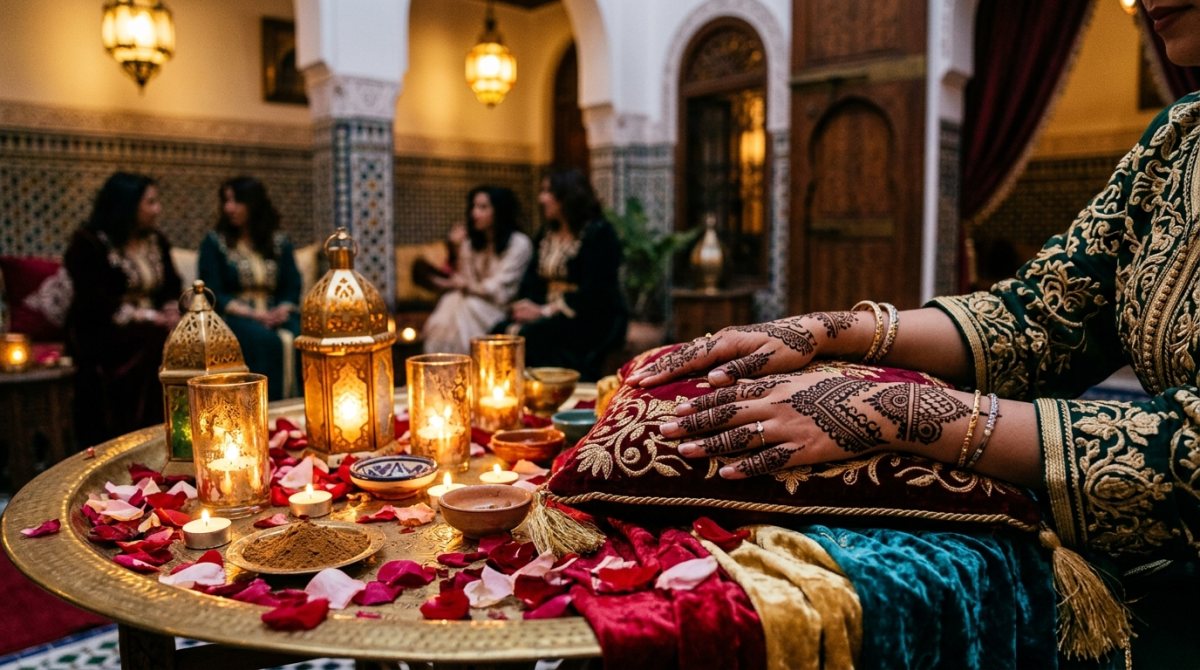
Shortly before the wedding night, family and friends gather around the bride in a warm scene filled with songs and the scent of henna. The henna night is one of the most cherished traditions of the Moroccan wedding, and it is far more than mere decoration: it is a moment of collective joy, du’a and blessing, in which everyone bids farewell to one stage and welcomes another. Yet for this night to remain as beautiful as it should be, we must understand its meaning and keep it within the etiquette of the faith.
The Symbolism of Henna in Our Culture
In Moroccan heritage, henna is a symbol of blessing, goodness and protection. When the bride’s hands and feet are adorned with it, this expresses joy at her move to the marital home, and the family’s wishes for her of a happy life. The beautiful patterns are not just decoration but a language of joy passed down through generations, tying the bride to her roots and family at a pivotal moment.
The Atmosphere and Spirit of the Night
The henna night is marked by the presence of the women of the family and neighbours, by songs and tambourines, Moroccan sweets and glasses of mint tea. This atmosphere expresses the warmth and closeness of the community, and everyone’s sharing in the joy of a new home. The true spirit of the night lies not in luxury, but in hearts gathering upon love and du’a for the couple.
Etiquette That Preserves the Joy
For the night to remain blessed, it should be guided by the etiquette of Islam: separating women from men, avoiding indecent songs and forbidden mixing, and staying away from extravagance and showing off. Lawful joy does not conflict with modesty; it is completed by it. A henna night in which the boundaries are honoured is more joyful and more blessed than one dominated by pretension and appearances.
Between Authenticity and Moderation
Sadly, some weddings turn into a race of spending, until the henna night becomes a financial burden rather than a joy. Wisdom is to keep the essence of the tradition — gathering, joy and du’a — and lighten its costly trappings. The couple do not need a lavish night, but a blessed beginning that starts with ease, not debt.
Du’a and Blessing, Not Just a Ritual
The most beautiful thing about the henna night is when it turns from a mere custom into a moment of sincere du’a: the mother praying for her daughter, the friends praying for the bride for happiness and righteous offspring, and Allah being remembered in the gathering. When du’a is present, the decoration turns into meaning, and the joy becomes worship.
Conclusion
The henna night is a cultural treasure we should be proud of and preserve, provided we keep it balanced by the scale of the Shariah and moderation. Keep its warmth, its songs and its du’a, and lighten its extravagance and pretension. In this way the henna night remains beautiful in memory, blessed on the scale, a beginning of joy rather than a burden of debt.