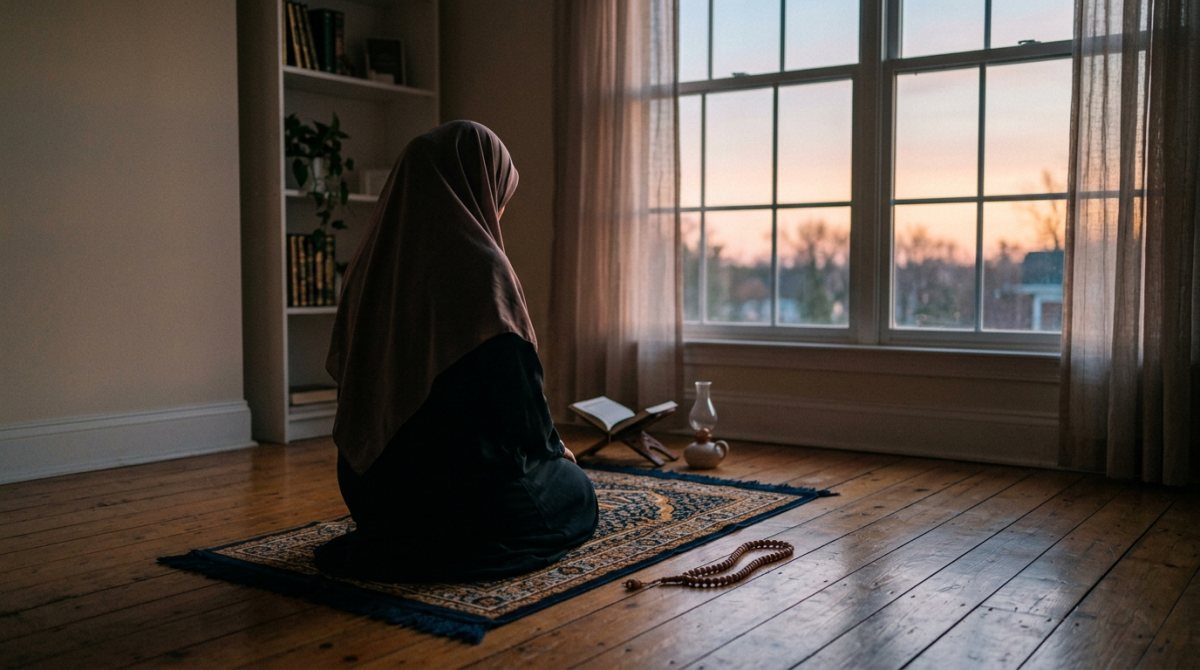
Istikhara for Marriage: Seeking Guidance Before You Decide
Istikhara is not a dream oracle. It is a calm way of placing a marriage decision in Allah's hands after you have done your part. Here is how to approach it properly.
Few decisions weigh on the heart like the decision to marry. You may have met someone through family, through friends, or on a Muslim matrimonial site. The conversations have gone well, the families are open to it, and yet a quiet question keeps returning: is this the right person for me?
Islam does not leave a believer alone with that question. Alongside careful thinking and honest consultation, the Sunnah offers a specific prayer for moments exactly like this one: salat al-istikhara, the prayer of seeking guidance. It is short, simple, and within reach of anyone — yet it is also one of the most misunderstood practices connected to marriage.
What istikhara actually is
Istikhara is a voluntary prayer of two units, followed by a supplication in which you ask Allah to guide the matter: to bring it about and bless it if it is good for your religion, your life and your future, and to turn it away — and turn your heart away from it — if it is not. The exact wording of the supplication is found in the authentic books of Sunnah; if you have not memorised it, read it from a reliable source, or ask your local imam to point you to it. There is no harm in reading it from paper or from your phone.
Notice what the prayer really contains. You are not asking for a vision, a dream, or a mysterious feeling. You are asking the One who knows what you do not know to steer the outcome itself. That is a very different thing — and a far more comforting one.
What istikhara is not
Many sincere people delay or damage good marriage prospects because of ideas that have no basis in the Sunnah. It is worth naming them clearly.
It is not a dream oracle
You are not required to see a dream after istikhara, and most people never do. Waiting night after night for a green light in your sleep — or panicking because you dreamt of something odd — turns a calm act of worship into a source of anxiety. Scholars remind us that guidance after istikhara usually appears in how events unfold, not in symbols on a pillow.
It is not a replacement for thinking
Istikhara comes after you have done your homework, not instead of it. The Sunnah pairs seeking Allah's guidance with seeking counsel from people of experience. Praying istikhara about a person you know almost nothing about is asking Allah to bless research you never did.
It is not a one-time magic switch
You may pray it more than once as the matter develops. Some people repeat it over several days while the families talk. There is flexibility here; what matters is sincerity, not a ritual count.
When to pray it during a marriage journey
A common question is timing: at which point in a serious acquaintance does istikhara belong? A practical answer used by many families looks like this:
- Too early: before you have even spoken seriously or learned the basics about the person. At this stage there is nothing concrete to seek guidance about.
- The right window: once the matter has become real — you have asked your questions, involved your family or wali, and you are genuinely weighing a yes or a no.
- Also valuable later: before finalising the engagement or setting the contract date, especially if new information has emerged.
In other words, istikhara sits at the point of decision, not at the point of curiosity. If you are still at the stage of gathering facts, our guide to the questions to ask before you say yes is the step that comes first.
Do your part first: knowledge and consultation
Before you stand for the prayer, make sure the decision in front of you is an informed one. That means honest conversations about faith, character, expectations, work, children and living arrangements. It means letting your family or wali meet the person and ask their own questions. It often means quietly checking what you have been told through people who know the other family.
Consultation — shura — is not a sign of weak faith; it is part of the same prophetic guidance. A parent, an aunt, an imam or a trusted married friend will often notice things you cannot see because your emotions are engaged. When their counsel and your own study of the matter point in a reasonable direction, istikhara is the seal you place on the process, entrusting the outcome to Allah.
How to understand the outcome
So you prayed. Nothing dramatic happened. How do you know the answer?
Look at three things, calmly and over some days:
- The way doors open or close. After istikhara, matters often become noticeably easy or noticeably obstructed. Families agree without friction, practical obstacles dissolve — or the opposite: delays multiply, conversations sour, things that should be simple keep failing. Many scholars describe this unfolding of ease or difficulty as the most common way guidance shows itself.
- The settling of your heart. Not a lightning bolt of certainty, but a gradual leaning. If, after prayer and reflection, you find yourself consistently at peace with proceeding — or consistently uneasy without a concrete reason you can fix — take that seriously.
- New information. Sometimes the answer arrives as a fact you did not know before: something praiseworthy that reassures you, or something concerning that surfaces just in time.
None of these should be read superstitiously. A single delayed phone call is not a divine rejection, and a pleasant coincidence is not a contract. You are looking at the overall direction of events combined with your informed judgement.
If you still feel uncertain
Doubt after istikhara does not mean the prayer failed. It usually means one of two things: either the matter genuinely needs more time and information, or the doubt is ordinary pre-marriage nervousness rather than a warning. Distinguishing between the two is its own skill — we have written a separate guide on when doubt means stop and when it does not, and it pairs well with this one.
What you should not do is treat lingering hesitation as a reason to freeze forever. Repeat the istikhara if you wish, consult once more, set yourself a reasonable deadline, and then decide like a believer: with effort, with prayer, and with trust that Allah does not abandon someone who sincerely asked for His guidance.
Common mistakes to avoid
- Praying istikhara instead of asking questions and involving family — it is a partner to due diligence, never a substitute.
- Waiting indefinitely for a dream or a physical sign before answering the other family.
- Asking someone else to pray istikhara on your behalf as a routine, while you stay disengaged from your own decision. Your future home deserves your own standing before Allah.
- Using "my istikhara was negative" as a polite excuse when the honest answer is simply "no". Kind clarity is better than pious ambiguity.
- Praying it about something already decided, just to feel confirmed. Istikhara is for genuine crossroads.
A decision made with light
When you must choose between more than one good possibility, the same prayer applies — istikhara and comparison work together, as we explain in our guide to choosing between two good marriage options.
Marriage will always involve a step into the unknown. No amount of questions removes every risk, and no prayer turns the future into an open book. What istikhara gives you is something better: the certainty that you did not walk alone. You studied the matter, you consulted, you asked the Lord of the heavens to choose for you — and then you moved forward with a heart that can rest, whatever comes.
Making the prayer part of a settled heart
One more thing helps people who struggle with istikhara: treat it as part of an ongoing relationship with Allah, not an emergency button pressed once in a panic. A heart already in the habit of prayer, of asking for guidance in small matters as well as large, comes to the marriage decision steadier and more able to sense where peace settles. If your connection has been thin, the weeks of a serious acquaintance are a good time to strengthen it — not as a technique to force an answer, but because a calmer, more prayerful heart simply decides better.
And remember that the fruit of istikhara is not only a correct choice; it is a quiet contentment with whatever unfolds. The person who prayed sincerely and then acted can rest in the knowledge that they did not choose alone, and that whatever comes was chosen for them by the One who loves their good more than they do. That contentment is worth as much as the decision itself.
If you are at the beginning of that road and still searching for the right person, you can start with a serious, honest profile on ZawajAmine, involve your family early, and let every step — including the last quiet prayer before your yes — be taken with intention.