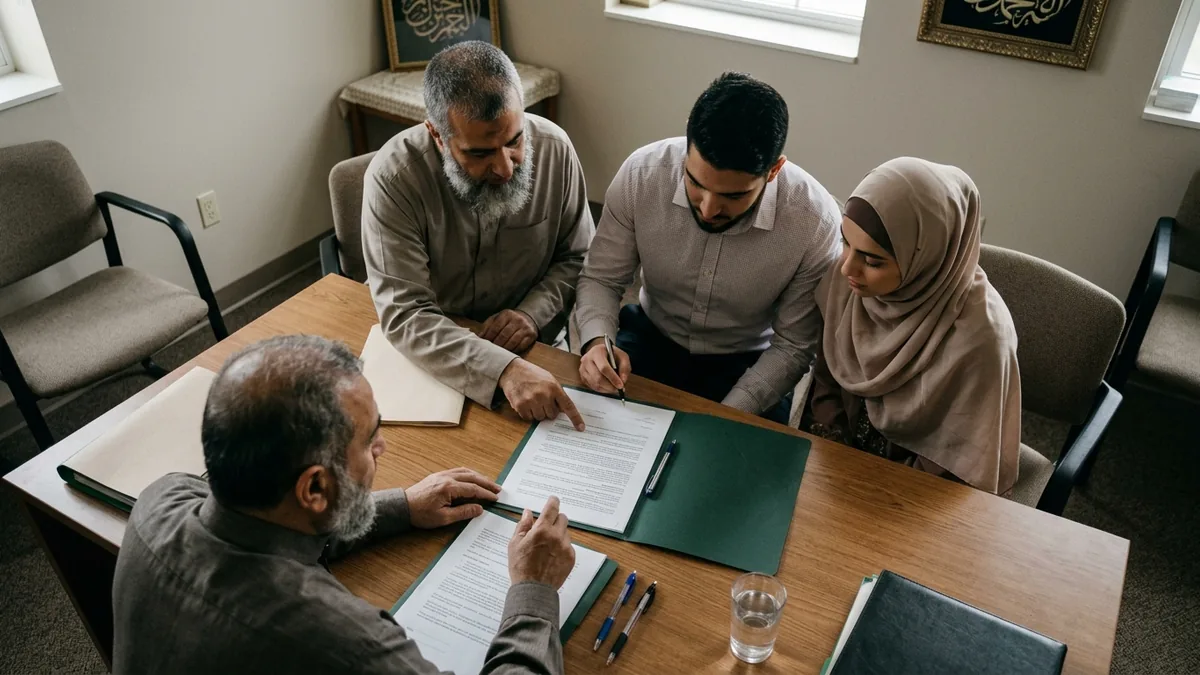
Understanding the Nikah Contract: Clauses and Conditions
The nikah contract is treated by many couples as a formality to rush through. In reality it is a solemn covenant that can hold conditions protecting both spouses.
For many couples the nikah contract is the part everyone is most eager to finish — a document to be signed quickly so the celebration can begin. Yet the Qur’an calls the marriage bond a solemn covenant, and the contract is where that covenant is given concrete, agreed shape. Treating it as a mere formality means signing something you never fully understood.
A nikah contract is not only a religious formality and it is not only a legal registration; in most settings it is both, and the two do not always cover the same ground. This guide explains what the contract actually establishes, which conditions a couple can include to protect themselves, and why understanding it before signing is an act of maturity rather than mistrust.
The nikah contract establishes the couple’s free consent, the mahr owed to the wife, and the marriage itself as a binding covenant. Beyond these essentials, spouses may include lawful conditions — about matters such as residence, study, work or monogamy — and valid conditions are meant to be honoured. Understand the contract, discuss any conditions before the ceremony, and, for a legally recognised marriage, ensure the civil registration is handled too.
What the contract actually establishes
At its core the nikah rests on consent, an offer and acceptance, witnesses and the mahr.
A valid marriage in Islam is built on the free consent of both parties, a clear offer and acceptance, the presence of witnesses, and the mahr due to the wife. These are not decorative details; they are the substance of the covenant. The involvement of the wali and the specific procedural requirements vary between schools and communities, which is one reason a qualified person should oversee the contract.
Understanding this protects everyone. A marriage entered without genuine consent, or with the essentials treated carelessly, stores up serious problems — religious, emotional and sometimes legal — for later.
Consent is not a formality to rush
Free, informed consent from both spouses is the foundation the whole contract rests on.
The bride’s free agreement is essential, not a rubber stamp. A marriage pressured through by family expectation, or arranged around someone who feels unable to say no, is built on a cracked foundation regardless of how correct the paperwork looks. Consent means a real, informed yes that could genuinely have been a no.
This is why the moments before signing matter. Both people should understand what they are agreeing to, including any conditions, and should feel free to ask questions rather than being hurried past them by the excitement or pressure of the day.
The mahr: the wife’s right, not a price
The mahr is an obligatory gift from husband to wife that belongs to her alone.
The mahr is a required part of the contract and is the exclusive property of the wife — not her family, and not a shared household fund. It can be modest or substantial, paid immediately or deferred, but it should be named clearly and agreed honestly rather than left vague or inflated for show.
Discussing the mahr calmly before the ceremony avoids one of the most common sources of last-minute conflict between families. It is a right to be honoured, not a bargaining weapon, and clarity here reflects the seriousness of the whole covenant.
Conditions you can include, and their weight
Spouses may add lawful conditions, and valid conditions are meant to be fulfilled.
Beyond the essentials, a couple may include conditions in the contract — for example about where they will live, the wife continuing her education or work, or that the husband will not take another wife. A well-known hadith stresses that the conditions most deserving to be fulfilled are those by which marriage is made lawful, which underlines that valid stipulations are serious commitments, not wishes.
Not every condition is permissible, and their enforceability can differ by school and by country. This is exactly why conditions should be discussed in advance and reviewed with someone qualified, so that what is written is both lawful and genuinely understood by both sides.
- Decide together, before the ceremony, which conditions matter to each of you.
- Phrase them clearly rather than as vague hopes.
- Check their validity with a qualified scholar or knowledgeable officiant.
- Make sure both families understand what has been agreed.
- Keep a copy of the final contract for both spouses.
Religious contract and civil registration
A valid nikah is not automatically a legally recognised marriage; in most countries you need both.
In many places a religious nikah alone does not give a couple the legal protections of a registered marriage — around inheritance, residency, children and financial rights. Relying on the nikah alone can leave a spouse, often the wife, seriously exposed if things go wrong.
Treat the civil and legal side as part of taking the covenant seriously, not as an afterthought. The precise requirements depend on your country, so confirm them with a reliable local source rather than assuming the religious ceremony has covered everything.
A practical example
Fatima wanted to finish her degree and to remain in her own city near her ageing mother. Rather than hoping it would work out, she and her fiancé wrote both points into the nikah contract as clear conditions, reviewed them with a knowledgeable officiant, and made sure both families understood.
Nothing about this reflected distrust; it reflected seriousness. When a job opportunity later tempted a move, the agreed conditions gave them a fair, pre-settled basis to discuss it rather than a painful argument about what had supposedly been promised. The contract had done exactly what a covenant is meant to do.
Frequently asked questions
Is the nikah contract just a formality?
No. The Qur’an calls marriage a solemn covenant, and the contract fixes consent, the mahr and any conditions. Rushing through it means agreeing to something you have not fully understood, which can cause serious problems later.
Can a woman set conditions in the marriage contract?
Within what is lawful, yes — for example about residence, study, work or monogamy. A well-known hadith stresses that valid conditions must be honoured. Enforceability varies by school and country, so review conditions with a qualified person beforehand.
Who does the mahr belong to?
The mahr is the wife’s exclusive property. It is not owned by her family and is not a shared household fund. It should be named clearly and agreed honestly rather than left vague or exaggerated for appearances.
Is a religious nikah enough legally?
Often not. In many countries a nikah alone does not provide the legal protections of a registered marriage. Confirm your local requirements and handle civil registration as part of taking the marriage seriously.
Sources and scope
- Qur’an 4:21 describes the marriage bond as a solemn covenant (mithaqan ghalizan).
- A well-known hadith in Bukhari and Muslim states that the conditions most deserving of fulfilment are those by which marriage is made lawful. The details of valid conditions, the wali’s role and mahr differ by school; consult a qualified scholar and confirm civil-registration rules in your country.
Treat the covenant with the seriousness it deserves
The nikah contract is not the boring paperwork before the celebration; it is the covenant itself, given clear and agreed form. Understanding what it establishes, naming the mahr honestly, discussing any conditions in advance and handling the legal registration are all ways of entering marriage with open eyes and mutual respect rather than vague assumptions.
Approach it as one step in a thoughtful path from serious interest to nikah, settle the financial understanding alongside it through the guide to handling money in marriage, and if a promising match is not right, know how to end a khitbah respectfully before any contract is signed.